Custom Microphone Housing Cost: 10 Factors That Change Tooling and Unit Price
The cost of a custom microphone housing cannot be estimated reliably from its outside dimensions or a reference photo alone. Two housings that look similar may require different alloys, tooling structures, machining time, finishes, inspection plans, and packaging. Those differences change both the one-time tooling cost and the recurring unit price.
For a useful comparison, separate the quotation into four parts:
Total program cost = one-time engineering and tooling + samples and approval + quantity × recurring production cost + logistics and import scope
The effective cost per accepted unit is the total program cost divided by the number of conforming parts received. This model prevents a low piece price from hiding an expensive mold, high reject risk, extra finishing charges, or an incomplete delivery scope.
The following ten factors explain where the money goes and which decisions a microphone brand can control before requesting a quote.
1. Housing Scope and Part Architecture
Start by defining what “the housing” includes. Review microphone housing products and body kits to distinguish individual parts from a complete set. A handheld microphone set may contain a body tube, grille head, upper and lower shells, battery cover, end cap, decorative rings, switch frame, mesh, foam, and internal brackets. One supplier may quote only the metal body, while another includes a finished multi-part set.
Part count affects much more than raw material. Every additional component can add drawings, fixtures, cutting or casting operations, deburring, finishing, inspection, assembly, and individual protection during packing. A design that consolidates two parts may reduce handling, but it can also create a more complex tool or make repair and color control harder.
Before comparing unit prices, align the bill of materials and identify:
- Components included and excluded
- Material and process for each component
- Supplied loose or assembled
- Mesh, foam, fasteners, inserts, and decorative parts
- Logo application and packaging scope
If the quotation scopes are different, the prices are not comparable.
2. Material Choice and Material Utilization
Material changes weight, feel, manufacturability, finish compatibility, and cost. Micbody supports custom microphone housings and metal components in zinc alloy, aluminum alloy, and brass. The best choice depends on the product architecture rather than material price alone.
| Material route | Typical design reason | Cost questions to ask |
|---|---|---|
| Zinc-alloy die casting | Substantial hand feel, complex exterior form, integrated features | Die size, slides or cores, casting yield, trimming, plating or painting, and required secondary machining |
| Aluminum tube or CNC-machined aluminum | Lower weight, cylindrical geometry, anodized or painted appearance | Stock size, material removal, number of setups, wall thickness, threads, surface preparation, and cosmetic handling |
| Aluminum die casting | Lower-weight complex geometry | Tooling complexity, castability, porosity control, machining allowance, and finish route |
| Brass components | Premium mass, decorative rings, or selected tube designs | Material mass, machining time, scrap recovery, polishing, and plating requirements |
Material utilization matters as well. A deeply machined part may start from a much heavier blank than the finished housing. A casting can reduce machining stock at volume, but it introduces tooling and casting-process requirements. Asking only for an alloy name misses these conversion costs.
Do not approve a cheaper alloy substitution without checking structural performance, finish appearance, RF and grounding design, corrosion exposure, and compatibility with mating parts.
3. Manufacturing Process: CNC, Die Casting, Drawing, or a Hybrid Route
The manufacturing route often creates the biggest difference between tooling cost and unit price.
CNC machining
CNC machining generally has lower dedicated tooling requirements and supports prototypes, design changes, and lower quantities. Its unit price reflects programming, fixtures, machine setups, cutting time, tool wear, material removal, and inspection. Features on several sides, deep cavities, thin walls, small cutters, and difficult workholding add time.
Die casting
Die casting requires a production tool, so the initial investment is higher. It can create complex near-net shapes and consolidate features, reducing repeated machining at suitable volumes. Tool design must address filling, venting, thermal control, ejection, parting, and any moving cores. The casting may still need CNC work on threads, bores, sealing faces, switch openings, or other critical interfaces. The NADCA die-casting FAQ outlines the role of metal flow, venting, thermal control, ejection, and moving cores in die design.
Drawn, extruded, stamped, or laser-cut components
Simple cylindrical tubes, mesh layers, brackets, and decorative parts may use other routes. These processes have their own setup, cutting, forming, joining, and finishing economics.
Hybrid production
Many practical microphone housings combine processes: a die-cast blank for the main form, CNC machining for interfaces, laser-cut mesh for the grille, and a separate surface finish. The correct comparison is the cost of the complete route, not “CNC versus casting” in isolation.
For budgeting, request at least two route options when the annual demand and design are not yet stable. A higher unit price with little dedicated tooling may be safer during validation; a production tool may become economical after the design and demand are proven.
4. Geometry and Tooling Complexity
Tooling cost is driven by how the part must be made, not by how smooth it looks in a rendering. For die-cast parts, undercuts, side holes, deep internal features, complex parting lines, thin or uneven walls, and difficult ejection can require slides, cores, inserts, or a larger die structure.
Geometry also affects production risk. More complicated flow paths, isolated thick sections, sharp transitions, or insufficient draft can make consistent casting and finishing harder. A removable insert may make a future feature change less expensive, but it must be planned before the tool is built.
Ask the supplier to explain which design features drive:
- The number of tool actions or moving cores
- Tool size and cavity arrangement
- Replaceable inserts
- Trimming and deburring
- Fixtures and gauges
- Expected secondary operations
This explanation is more useful than negotiating a tooling total without understanding the design behind it. See the questions to confirm before tooling a microphone housing for the wider design-freeze checklist.
5. Tolerances, Threads, and Secondary Machining
Tight tolerances are valuable where they protect function. Applying them to every dimension adds unnecessary manufacturing and inspection cost.
Microphone-housing dimensions that may deserve closer control include grille-to-body threads, mating diameters, battery-cover fit, switch and display openings, connector position, PCB mounting points, capsule location, and concentric cosmetic joints. Non-critical exterior dimensions can often use a general tolerance appropriate to the process.
A die-cast dimension and a CNC-finished dimension should not automatically carry the same expectation. The drawing needs to identify datums, critical characteristics, coating condition, and inspection method. ISO 8062-3:2023 covers general dimensional and geometrical tolerances and machining allowances for castings; it also makes clear that a 3D model without indicated dimensions is not enough to define those requirements.
Finish buildup must be included in the tolerance stack. Paint, plating, or anodizing can change thread engagement and mating clearances. Masking a thread adds an operation; machining it after finishing creates another set of appearance and corrosion considerations. The cost-effective answer is to control the functional interface deliberately, not to tighten the whole drawing. Related guidance explains how thread and surface-treatment problems in microphone tubes can appear when fit and finish are not designed together.
6. Surface Finish, Color, Texture, and Logo Decoration
Surface finishing is both a manufacturing stage and a quality system. Painting, powder coating, anodizing, plating, polishing, brushing, blasting, laser marking, and screen printing require different preparation, fixtures, masking, process control, and approval.
Price rises when the specification adds:
- Multiple colors or finishes in one housing set
- Tight color or gloss matching across different materials
- High-cosmetic visible-surface requirements
- Masked threads, contacts, bores, or grounding points
- Polishing before plating or a fine pre-anodizing surface
- Multi-pass logos, precise registration, or protective topcoats
- Special durability tests and documented results
A color name such as “matte black” is not a complete specification. Define a color reference, gloss or texture range, visible zones, permitted defects, masking map, logo artwork, and approved sample process. Clear criteria reduce conservative pricing and arguments after production.
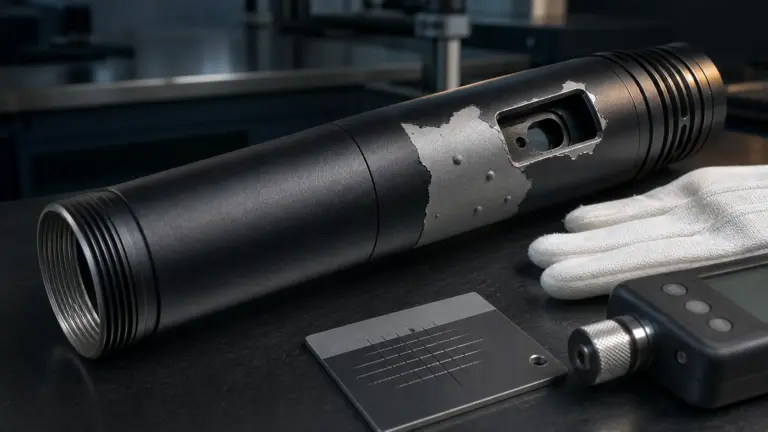
Do not save money by silently removing cleaning, pretreatment, cure control, or finish validation. The guide to microphone body paint peeling and finish control explains why the complete substrate–pretreatment–coating system matters. A cheaper coating that peels, chips during assembly, or mismatches across parts increases the effective cost of accepted units.
7. Prototype, Approval, and Engineering-Change Requirements
Prototype cost is not the same as production unit price. Early housings may be 3D printed or CNC machined to validate grip, internal space, assembly access, and electronics. A die-cast first article then validates the actual tool and production route. Cosmetic samples may require separate color or texture development.
Each stage can include programming, fixtures, material, finishing, measurement, trial assembly, and reporting. These are legitimate one-time activities even when only a few physical parts are delivered.
Late changes are a major cost risk. Moving a button, changing a battery, adjusting a thread, or revising an antenna zone after tooling begins may require an insert modification, re-machining, a new sample, and reapproval. Freeze the electronics envelope and critical interfaces before authorizing production tooling.
The RFQ should say whether sample charges, tooling trials, finish samples, inspection reports, and design revisions are included or quoted separately.
8. MOQ, Order Quantity, and Release Pattern
MOQ is partly an economic result of setup and batch costs. A production run can require material purchasing, machine setup, die setup, color preparation, line cleaning, first-piece approval, inspection, and packaging before the first saleable unit is completed.
As quantity increases, those fixed batch costs are spread across more parts. Tooling can also be amortized across the expected program volume for internal budgeting:
Amortized tooling per unit = tooling and NRE cost ÷ expected lifetime program quantity
However, a larger order does not eliminate material, cycle time, finish, inspection, or packaging. It may also create inventory, cash-flow, design-obsolescence, and storage risk for the buyer. The lowest piece price is not automatically the lowest business cost.
Request tiered prices at realistic quantities—for example, validation, launch, and stable production levels—plus an annual forecast and planned release frequency. The supplier can then show where the process route or batch economics change. Do not submit an inflated forecast only to obtain an unrealistic unit price.
9. Quality Plan, Yield, Assembly Scope, and Packaging
A quotation must define what qualifies as an accepted part. Inspection time and yield risk depend on the drawing, cosmetic standard, test plan, sample size, documentation, and whether the supplier checks individual components or an assembled housing set.
Tight cosmetic limits can increase handling and rejection. Complex finishes, difficult cast surfaces, thin edges, and multi-part color matching may require more process control. Functional gauges, thread checks, trial assembly, or measurement reports add work but can prevent larger losses at the assembly plant.
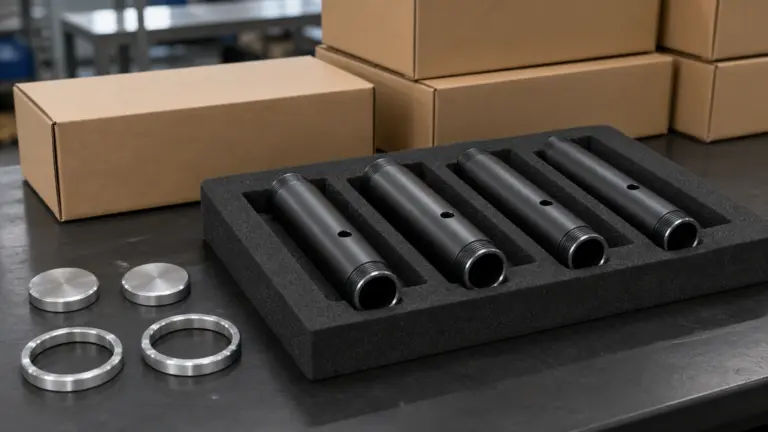
Packaging is part of unit cost because finished housings can scratch, dent, stain, or damage their threads in transit. Individual sleeves, trays, separators, thread protection, moisture control, export cartons, and pallet requirements should be specified before the quote is compared.
For buyers supplying an assembly line in Vietnam or another Southeast Asian market, evaluate the cost of a rejected or cosmetically damaged batch after cross-border transport—not just the factory piece price.
10. Delivery Scope for Vietnam and Southeast Asia
The same factory unit price can produce different landed costs. A quote should name its currency, validity period, packing basis, named place or port, freight inclusion, insurance, export documentation, and Incoterms® 2020 rule.
Incoterms® 2020 allocate specified delivery obligations, risks, and costs between buyer and seller; they do not make two differently scoped quotations equivalent. Compare EXW, FCA, FOB, CIF, DAP, or another offered term only after confirming the exact named place and what remains for the buyer to pay.
For a Vietnam or Southeast Asia purchasing budget, also identify:
- International freight and local delivery
- Customs brokerage, import duties, and taxes as applicable
- Bank, currency, and payment charges
- Consolidation with other components
- Packaging dimensions and chargeable weight
- Replacement or rework logistics for nonconforming parts
Micbody-specific shipping terms and destination commitments should be confirmed in the project quotation rather than assumed from this guide.
Where Cost Reduction Is Safe—and Where It Is Not
Productive cost reduction removes work or uncertainty while preserving function. Common DFM opportunities include simplifying a parting line, reducing machining setups, opening tool access, standardizing a thread or fastener, using a replaceable tool insert, limiting tight tolerances to critical interfaces, reducing unnecessary finish combinations, and aligning order releases with efficient batch sizes.
Do not reduce cost by:
- Loosening a critical fit without a tolerance-stack review
- Substituting an alloy without validating weight, strength, RF, finish, and corrosion needs
- Removing surface preparation or cure controls
- Skipping physical assembly and finish approval
- Accepting an undefined cosmetic standard
- Comparing quotations with different component, inspection, packaging, or Incoterms scopes
- Committing to excess inventory only to reach a lower piece-price tier
The useful question is not “How do we make every line cheaper?” It is “Which cost prevents failure, and which cost comes from avoidable complexity?”
What to Send for a Comparable Microphone Housing Quote
Use one controlled RFQ package for every supplier:
- 3D CAD file and 2D drawing with revision number
- Exploded assembly and bill of materials
- Material and preferred manufacturing route, or permission to propose alternatives
- Critical dimensions, datums, tolerances, and thread specifications
- Finish, color, gloss or texture, masking, visible-surface, and logo requirements
- Mating components or interface models
- Prototype, first-article, cosmetic-sample, and approval requirements
- Validation quantity, launch quantity, annual demand, and release schedule
- Inspection, test, reporting, packaging, and labeling requirements
- Delivery destination, currency, named place, and requested Incoterms rule
Ask for separate lines for engineering/NRE, production tooling, samples, unit price by quantity tier, finish and decoration, inspection or reports, packaging, and freight. Also confirm payment milestones, tooling ownership, maintenance, modification, storage, quote validity, and what happens if the design changes.
Turn a Budget Estimate Into a Manufacturing Quote
A credible custom microphone housing cost is the result of a defined design and a consistent quotation scope. Material, process, geometry, tolerance, finish, MOQ, approval, quality, packaging, and delivery terms all interact; changing one can move both tooling cost and unit price.
Micbody is a custom microphone housing manufacturer serving B2B OEM/ODM projects for precision microphone housings and metal components. The supported manufacturing scope includes prototyping, tooling, die casting, CNC machining, laser cutting, surface finishing, and mass production. Review the microphone housing OEM FAQ, then send your 2D and 3D files or a physical sample, the target materials and finish, mating-part details, quantity tiers, acceptance requirements, and delivery destination for a project-specific manufacturability review and quotation.
FAQ
How much does a custom microphone housing cost?
There is no reliable universal price without a drawing and production scope. The supplier needs the component set, material, process, tolerances, finish, quantity, inspection, packaging, and delivery terms. Compare total program cost and effective cost per accepted unit, not only the quoted piece price.
Is tooling cost included in the unit price?
It depends on the quotation. Tooling may be charged separately, amortized into the unit price, or divided across milestones. Ask the supplier to show engineering/NRE, tool manufacture, trials, samples, and recurring unit price as separate lines, then confirm tool ownership and modification terms.
When is CNC machining cheaper than die casting?
CNC can be more economical when quantity is low, design changes are likely, or dedicated tooling cannot be justified. Die casting can reduce repeated machining and unit conversion cost at suitable volumes, but it requires production tooling and a stable, castable design. A volume-based route comparison is more useful than a fixed crossover number.
Does a higher MOQ always lower the real cost?
A higher quantity usually spreads setup and batch costs across more units, but it also increases inventory, cash commitment, storage, and design-change exposure. Evaluate the total landed and inventory cost at realistic launch and production quantities.
What information most improves quote accuracy?
Provide controlled 2D and 3D files, an exploded BOM, mating interfaces, material and finish requirements, critical tolerances, quantity tiers, inspection and packaging needs, and the delivery destination with a requested Incoterms rule. Photos alone rarely define enough information for a production quote.